
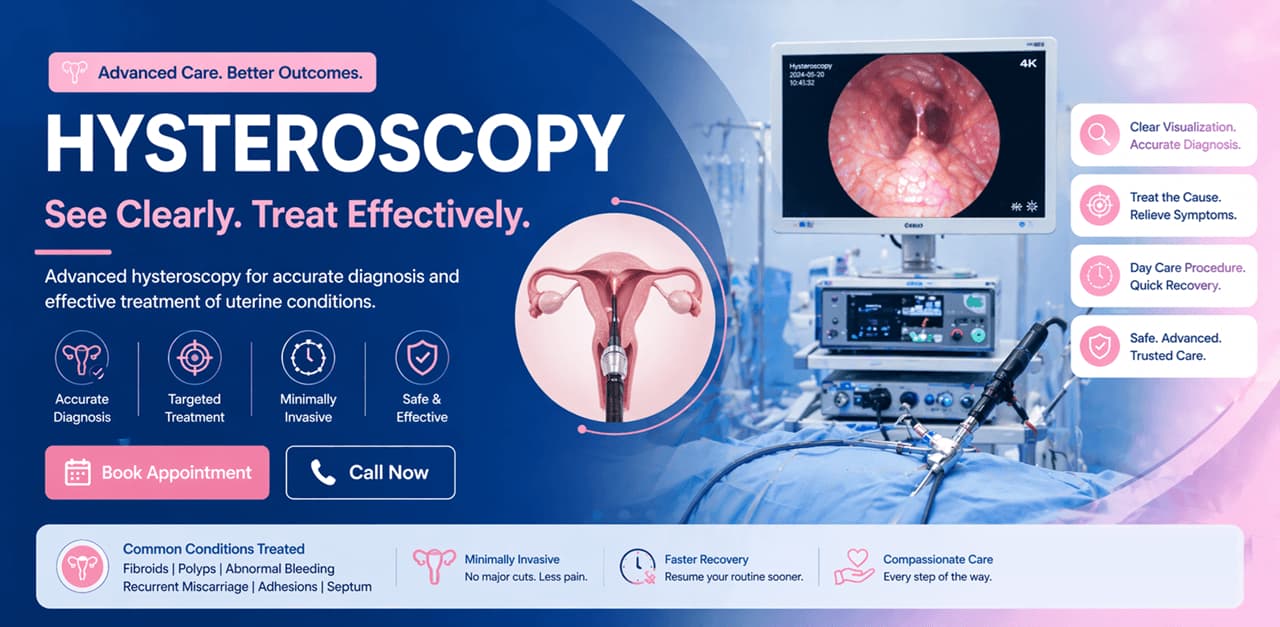
Hysteroscopy Diagnosis & Treatment of Uterine Conditions
Hysteroscopy is a minimally invasive gynecological procedure that allows a doctor to examine the inside of the uterus using a thin, lighted instrument called a hysteroscope. It is inserted through the vagina and cervix, eliminating the need for cuts or stitches.
This procedure is commonly used to diagnose and treat abnormal uterine conditions, especially abnormal uterine bleeding, infertility, and recurrent pregnancy loss.
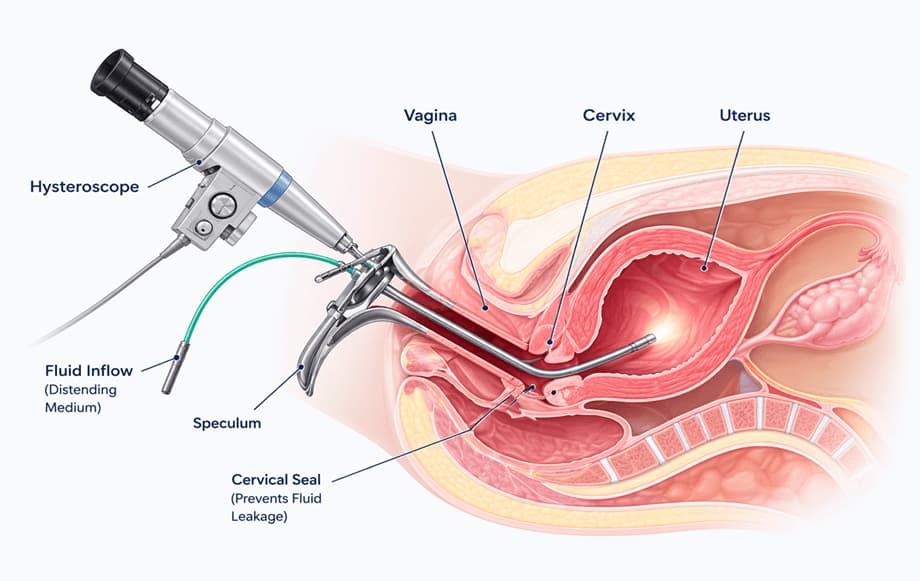
Types of Hysteroscopy
Hysteroscopy can be categorized into two main types:
- Diagnostic Hysteroscopy
Used to detect abnormalities inside the uterus. - Operative Hysteroscopy
Used to treat identified conditions during the same procedure.
Why is Hysteroscopy Done?
Your doctor may recommend hysteroscopy for:
- Abnormal uterine bleeding
- Infertility evaluation
- Recurrent miscarriages
- Postmenopausal bleeding
- Removal of polyps or fibroids
- Lost or misplaced IUCD (Copper-T)
Hysteroscopy Procedures Offered
1. Hysteroscopic Adhesiolysis
Treatment for intrauterine adhesions (scar tissue), commonly seen in Asherman’s Syndrome, to restore normal uterine cavity.
2. Hysteroscopic Septum Resection
Correction of uterine septum (a congenital abnormality) to improve fertility and reduce miscarriage risk.
3. Hysteroscopic Myomectomy
Removal of submucosal fibroids that may cause heavy bleeding or infertility.
4. Hysteroscopic Polypectomy
Removal of endometrial polyps, which can lead to irregular bleeding and fertility issues.
5. Hysteroscopic Fallopian Tube Cannulation
Used to open blocked fallopian tubes (cornual block), improving chances of natural conception.
6. Hysteroscopic TCRE (Transcervical Resection of Endometrium)
A procedure for treating dysfunctional uterine bleeding (DUB) by removing part of the endometrial lining.
7. Hysteroscopic Removal of Missing IUCD
Safe retrieval of a misplaced or non-visible intrauterine contraceptive device.
8. Hysteroscopic Foreign Body Removal
Removal of any abnormal objects or retained tissues from the uterus.
9. Hysteroscopic Endometrial Biopsy
Collection of uterine lining tissue for further investigation (e.g., abnormal bleeding, cancer screening).
10. Cervicoscopy
Detailed examination of the cervical canal for abnormalities.
11. Vaginoscopy
Inspection of the vaginal canal, often used in cases where speculum examination is difficult.
Benefits of Hysteroscopy
- Minimally invasive (no cuts or stitches)
- Quick recovery time
- Accurate diagnosis and treatment in one procedure
- Minimal pain and discomfort
- Day-care procedure (no long hospital stay)
Preparation for Hysteroscopy
- Avoid eating or drinking for a few hours before the procedure (if anesthesia is used)
- Inform your doctor about medications or medical conditions
- Schedule the procedure after your menstrual period for better visualization
Recovery After Hysteroscopy
- Mild cramping or spotting for 1–2 days is normal
- Most patients resume normal activities within 24–48 hours
- Follow-up consultation may be required based on findings